

Pressure
What should be checked during pressure-gauge calibration?
Pressure gauges can affect process control and safety. Clear ranges, test points, pressure direction and acceptance criteria make calibration results useful for the intended application.
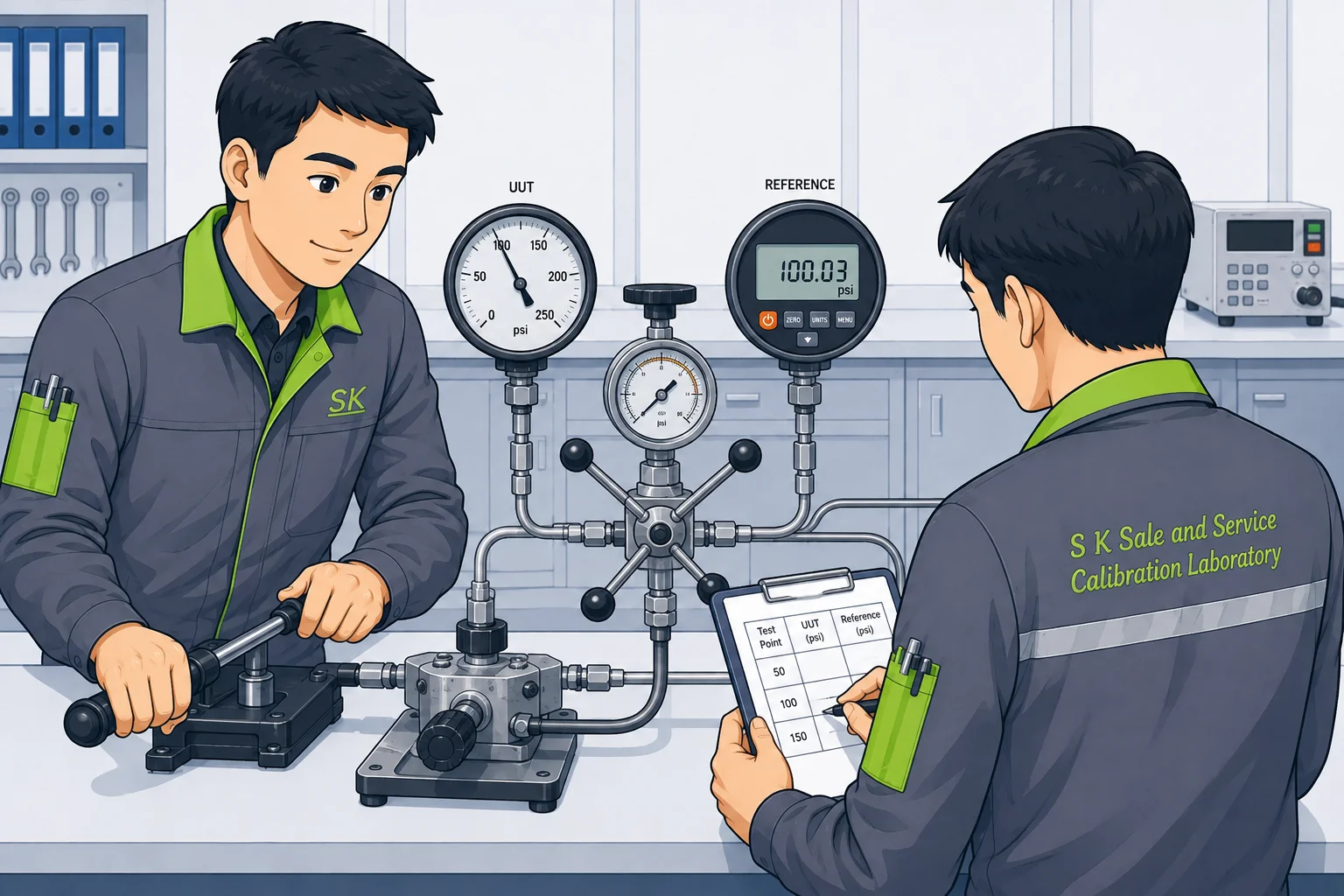
Plan points and pressure direction
Select points throughout the operating range and include critical control values. Measure increasing and decreasing cycles when hysteresis is relevant.
- Specify gauge, absolute or differential pressure
- Confirm units and maximum rating
- Define cycles and stabilization time
- Record the required mounting orientation
Instrument readiness and safety
Declare previous process media, clean and isolate contaminated equipment, and identify connection type and size to prevent delay or damage.
- Check leaks, pointer, display and connections
- Avoid media incompatible with the instrument
- Agree criteria and decision rules before work
FAQ
Why calibrate in increasing and decreasing directions?
It reveals hysteresis, the difference in indication as pressure rises and falls, which may affect process decisions.
Can an oxygen-service gauge be calibrated?
Declare the service and cleanliness requirements in advance. The laboratory must assess media compatibility, equipment and safety procedures before accepting the work.