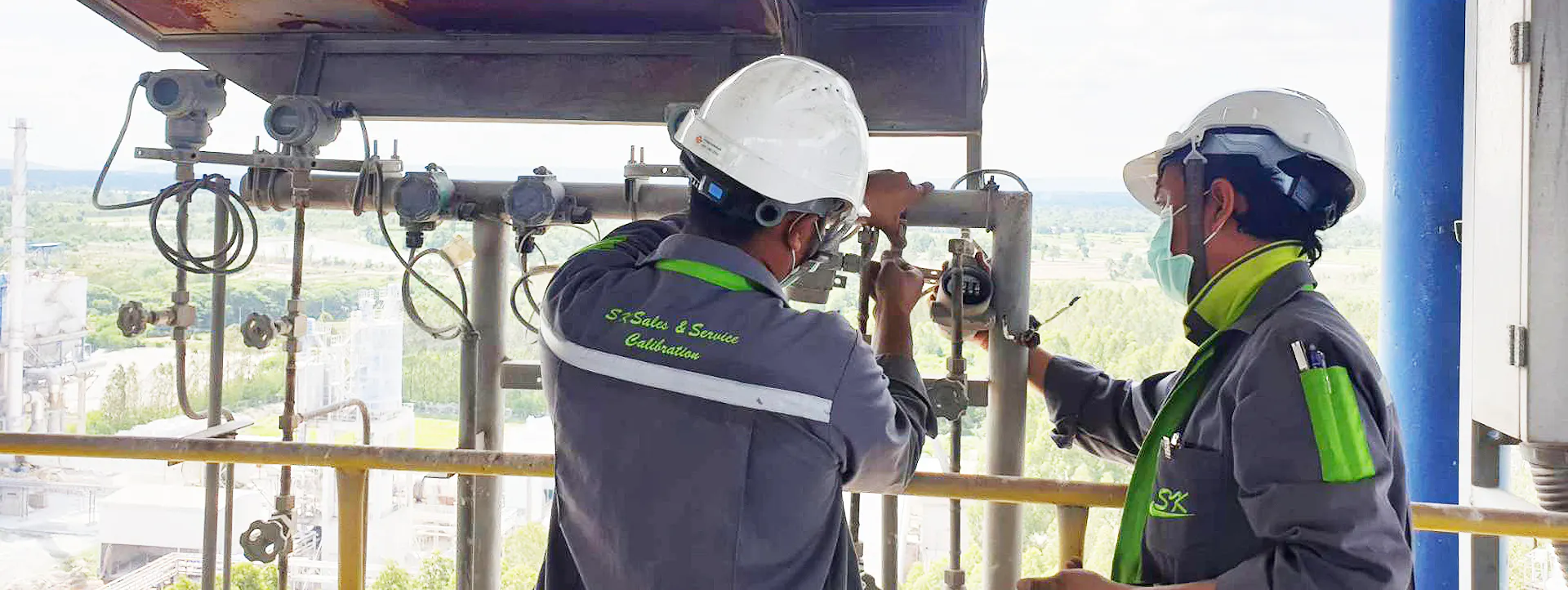
S K Sale and Service Co.,Ltd.

Calibration Service

Chamber / Oven / Incubator Calibration

Calibration and temperature-distribution surveys for chambers, ovens and incubators.

Temperature ChamberHumidity ChamberOven
Request Quotation →
Chamber / Oven / Incubator Calibration

Service Overview

Calibration and temperature uniformity survey services for chambers, ovens and incubators. We help customers verify stability, mapping performance and working-zone suitability for regulated production and laboratory workflows.

Typical Applications

  • ✓ Temperature mapping
  • ✓ Stability verification
  • ✓ Production and lab equipment qualification

Our Calibration Capabilities

Verified scope information matched to this service. Open a capability to review its complete instruments, ranges, CMC and accreditation evidence.

TISI 0261ANAB AC-3279

Temperature Calibration

Temperature instrument calibration for industry, laboratories, quality control and production processes requiring traceable measurement results.

Verified scope rows
101
Supported instruments
11
  • Temperature Indicator with Sensor
  • Temperature Sensor - Resistance Thermometer
  • Temperature Sensor - Thermocouple
  • Thermometer with Sensor / Temperature Data Logger
View complete scope →
TISI 0261

Humidity Calibration

Thermo-hygrometer and temperature/humidity data logger calibration within TISI 0261 scope.

Verified scope rows
6
Supported instruments
2
  • Thermo-Hygrometer
  • Temperature/Humidity Logger
View complete scope →

Instruments We Calibrate

Temperature ChamberHumidity ChamberOvenIncubatorFreezer

Need Chamber / Oven / Incubator Calibration?

Contact our sales team for scope confirmation, technical guidance and a quotation.

Request Quotation

Chamber, oven and incubator calibration and mapping

Temperature checks, distribution, uniformity and stability studies are available for chambers, ovens, incubators, freezers and controlled spaces, with locations and conditions based on actual use.

Information needed for temperature mapping

  • Equipment type, internal dimensions and operating range
  • Control points, alarms and acceptance criteria
  • Loaded or unloaded study condition
  • Sensor positions and required recording duration

Preparing chambers, ovens and incubators

  • Check controls, fans, doors and seals
  • Provide access for sensors without blocking circulation
  • Define load pattern and operating program
  • Arrange site coordination and safety requirements

Choose the right oven calibration or mapping work

Display checks, probe calibration and chamber-area surveys answer different questions. Agree the required work before planning.

  • Compare the indicated value with a reference at an agreed location and using the agreed method.
  • Calibrating a probe or readout does not confirm every location inside the chamber.
  • Temperature mapping records multiple locations over time to assess uniformity and stability under test conditions.
  • Define the usable area, shelves and load so results relate to the process.
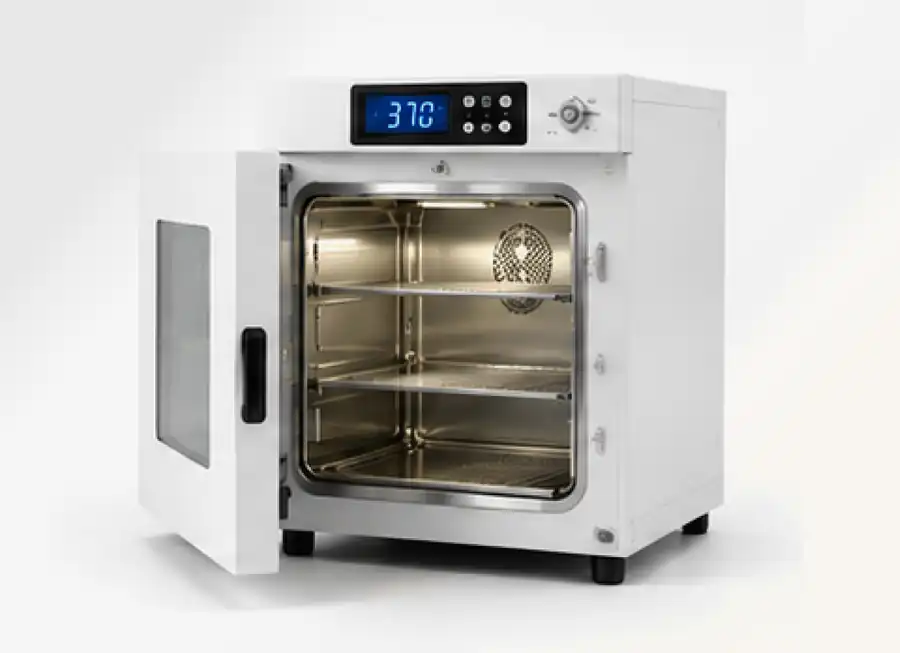
Example incubator with internal shelves
Equipment illustration, not SK fieldwork

Oven, Chamber and Incubator details for quotation

Send equipment photos and details so SK can assess the method, operating range and scope for each item.

  • Brand, model, serial number, internal dimensions and location.
  • Operating setpoints, programs and number of instruments.
  • Loaded or unloaded condition, load material, quantity and arrangement.
  • Acceptance criteria, recording duration and any humidity requirement.
  • Temperature baths and furnaces require individual methods rather than the same plan for all equipment.
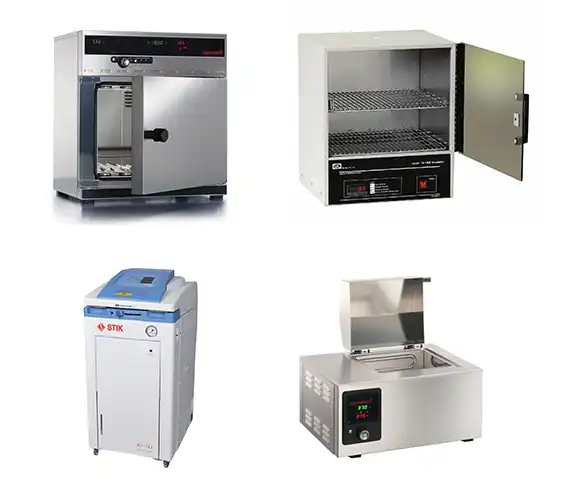
Examples of ovens, chambers and temperature baths
Methods and conditions differ by equipment type

Service workflow and site preparation

Agree a repeatable plan with the equipment owner, including probe positions, loading and operation.

  • 1. Send equipment details, purpose, setpoints and acceptance criteria.
  • 2. Confirm method, probe positions, recording time, load and accreditation status.
  • 3. Arrange access, power and safety under site requirements.
  • 4. Record results according to the agreed plan; adjustment or repair requires separate approval.
  • 5. Review results, test conditions and relevant uncertainty before making process decisions.

Define the scope of furnace and probe work

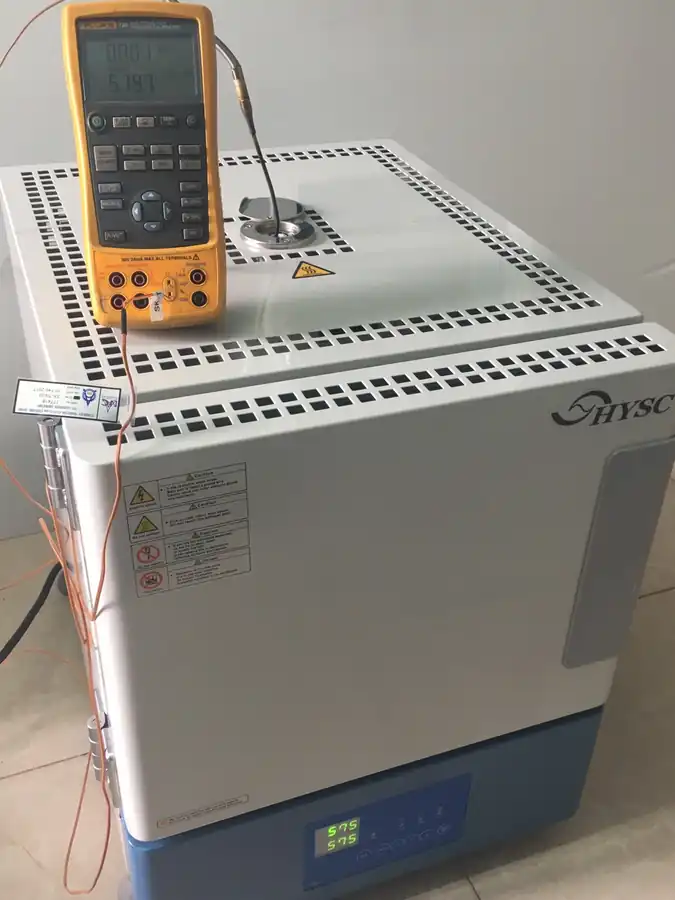
The photograph illustrates equipment used with a probe at a furnace. It does not demonstrate multi-position temperature mapping.

  • Identify the probe, readout and whether the work covers the sensor or complete system.
  • Confirm the range and appropriate method; numbers in the photograph are not accredited-range evidence.
  • Discuss probe removal and hot-area access restrictions with the equipment owner.
  • State as-found requirements before work begins.
View temperature probe calibration →
Readout and temperature probe at a furnace
Probe-work illustration, not evidence of mapping or accredited range

Oven calibration or temperature mapping?

A control-probe check does not describe every position inside a chamber. For working-area uniformity, agree positions, recording duration, loading, method and accreditation before work.

  • Ovens: identify setpoints, usable area and shelves.
  • Incubators: identify incubation conditions and process criteria.
  • Chambers: specify programs and temperature or humidity requirements.
  • Mapping: agree repeatable loading, positions and recording time.

FAQ

How does single-point calibration differ from temperature mapping?

A single-point check evaluates one location, while mapping uses multiple positions to assess distribution, uniformity and hot or cold spots in the usable space.

Should mapping be performed loaded or unloaded?

The choice depends on purpose and requirements. A representative, repeatable load pattern is preferable when the study must reflect routine use.

How many probe positions and how much recording time are needed?

The plan depends on usable dimensions, shelves, load, programs, purpose and customer requirements. Agree it beforehand; one fixed count or duration is not suitable for every instrument.

What does oven calibration cost and how long does it take?

It depends on instrument count, setpoints, positions, recording duration, load and location. Provide details and the date when results are needed for quotation and delivery confirmation.

Is every oven or mapping job covered by ISO/IEC 17025?

No. Check the instrument type, range, method and conditions against the published scope. Ask SK to confirm the actual work before quotation.

What should be done after relocation, repair or a load change?

Assess whether the change affects chamber conditions, then plan repeat checks based on risk, requirements and performance history. A single interval does not suit every process.

View all guides

Ask SK to assess oven calibration and temperature mapping

Send photos, model, internal dimensions, setpoints, load, acceptance criteria and location so the team can plan the work and confirm scope before quotation.

Request an oven calibration quotation →
Learn what calibration means →