

Using temperature instruments
How to use a probe thermometer correctly and reduce measurement errors
The same thermometer can give different readings when probe placement or waiting time changes. Reliable results depend on the right sensor, adequate immersion, thermal equilibrium and a known calibration status.
1. Match the probe to the application
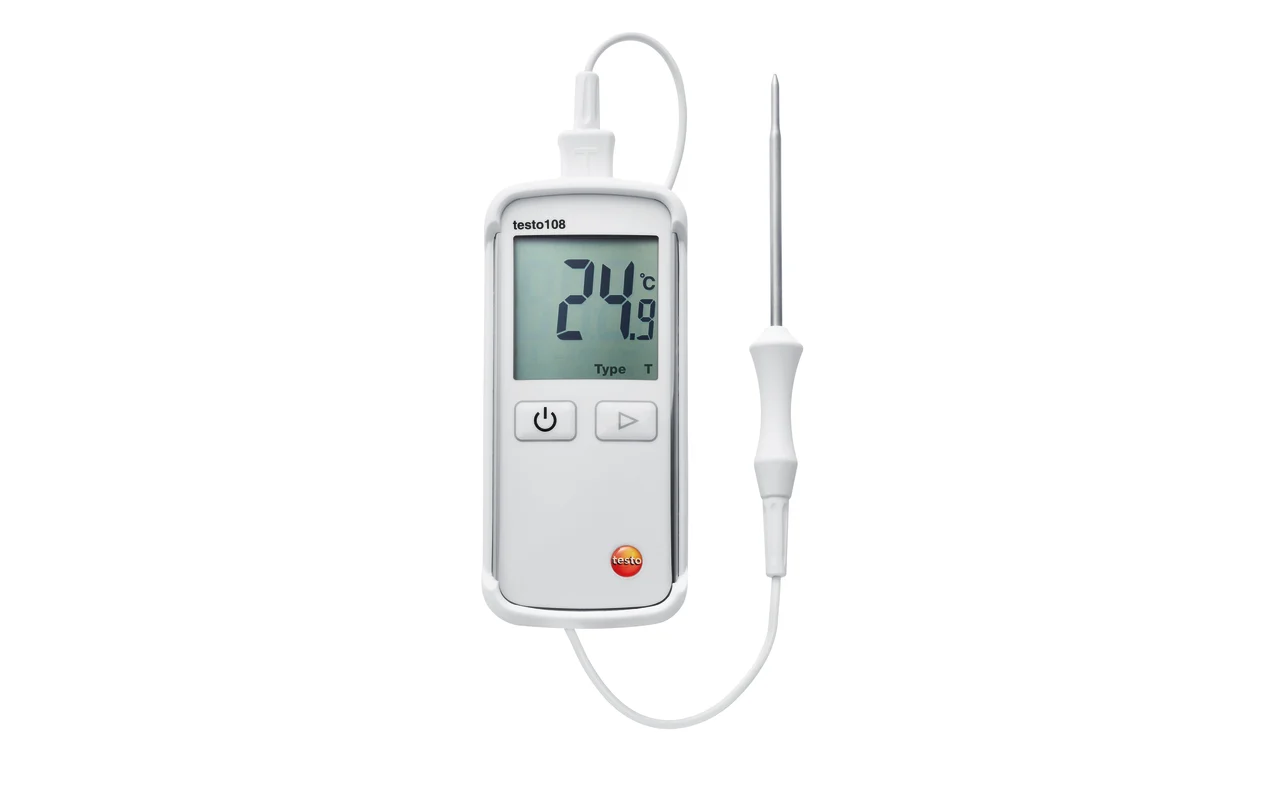
Choose a penetration, immersion, surface or air probe for the intended measurand. Check instrument and probe limits, batteries, damage and °C/°F settings. On interchangeable thermocouple instruments, match the Type T/K setting to the connected probe and allow acclimatisation after a change of environment.
References: Testo 108 · Instruction manual, §7.2–7.3
2. Immerse the sensing area, not just the tip
Follow the actual probe manual. The Testo 106 manual specifies more than 15 mm; the Testo 108 manual specifies at least 22 mm for the described configuration. Replacement probes may have different requirements. Minimum depth alone does not guarantee negligible stem-conduction error in every application.
References: Testo 106 · Instruction manual, §7.2 · Testo 108 · Instruction manual, §7.2–7.3
3. Measure at a representative location
For food, position the sensing area in the centre of the thickest part, away from bone and fat. Insert from the side of thin pieces when necessary. Define a sampling plan rather than treating one reading as representative of an entire batch.
In liquids, maintain sufficient immersion without touching the vessel. Mix gently where the process permits; avoid using a reading next to a heater to represent the whole tank.
- Define core, surface or liquid temperature before selecting a probe.
- Do not force a standard probe into frozen or hard material.
- Follow the process-specific temperature and time criteria.
References: USDA FSIS · Probe placement in food
4. Wait for equilibrium before using HOLD
Keep the probe in position until readings stabilise according to the manual and work procedure. A display that updates quickly may still be showing a changing probe temperature.
DeltaTrak 11047 specifies a one-second display update. This is not a guarantee that the probe reaches the sample temperature in one second. Response depends on the probe, medium, immersion and temperature difference.
References: DeltaTrak 11047 · Product specifications
5. Clean and protect the instrument
Clean before and after use using compatible methods. Follow the site's hygiene procedure to prevent cross-contamination. Respect the permitted immersion and cleaning limits of the assembled instrument; an IP rating does not authorise steam cleaning or autoclaving. Dry and protect the probe without bending it.
References: Testo 106 · Instruction manual, §7.2 · Testo 108 · Instruction manual, §7.2–7.3
6. Resolution is not accuracy
A 0.1 °C display increment does not establish ±0.1 °C accuracy. Consider specifications, calibration results for the instrument-and-probe combination, uncertainty and the acceptance rule.
If the certificate defines error as indication minus reference, a +0.4 °C error corresponds to a −0.4 °C correction at that point. Do not apply it across the entire range without supporting data. Record instrument/probe identity, location, time, indication and any applied correction.
7. Use an ice check as an intermediate check
For a suitable probe, prepare a clean insulated vessel packed with small ice pieces and water made from the same clean water source. Maintain ice throughout the mixture rather than a little floating ice in cold water. Allow equilibrium, immerse sufficiently without contacting the vessel, wait for stability and record against your procedure's limits.
This is a practical check near 0 °C, not proof of accuracy across the range or a replacement for required multi-point calibration.
References: NIST · Ice melting point validation method
8. Choose the instrument and calibration together
Tell SK your sample, temperature range, accessible depth, acceptance criteria and cleaning method. We can discuss the appropriate model, probe and calibration points. Confirm accredited coverage for the requested range and method before ordering an ISO/IEC 17025 accredited service.
Choose a probe thermometer for your application
SK supplies measuring instruments and calibration services, so you can discuss selection and ongoing instrument care with one team.
Routine food temperature checks
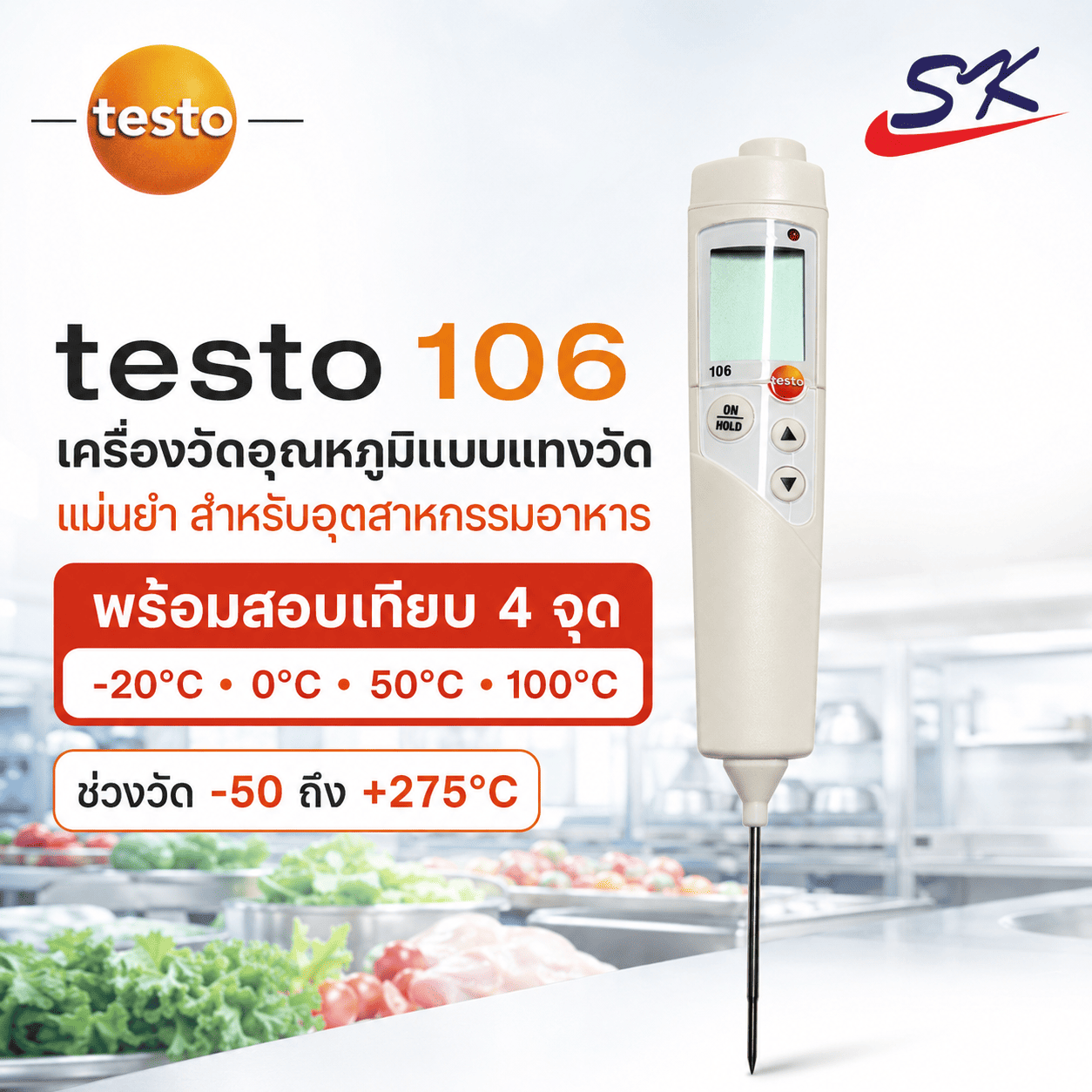
Testo 106
Integrated penetration probe for receiving and food-core checks where the probe can reach the required position.
Preliminary calibration at the specified points: −20, 0, 50 and 100 °C.
View details and enquire →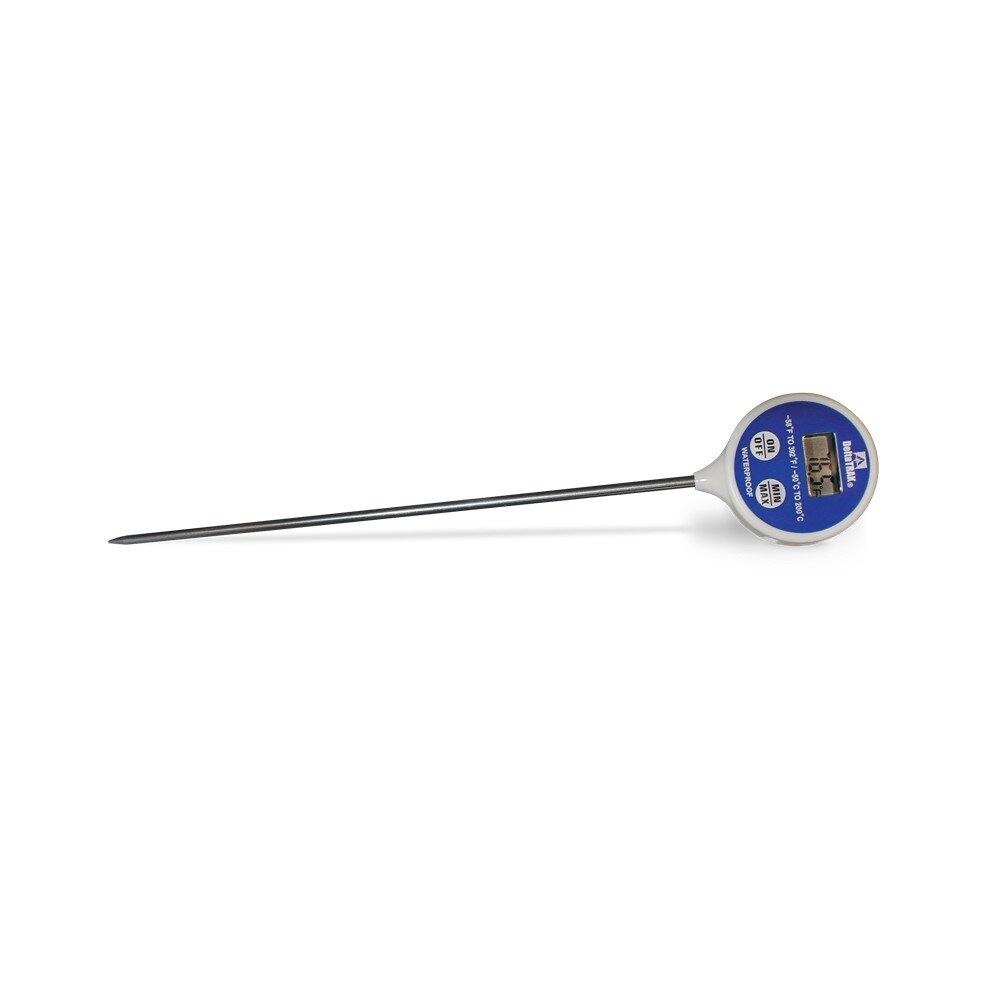
Applications needing a 200 mm probe
DeltaTrak 11047
Consider for deeper access to liquids or samples, subject to vessel geometry and the cleaning procedure.
Range −50 to 200 °C · Stem length is not the minimum immersion depth.
View details and enquire →Applications requiring interchangeable probes
Testo 108
Supports Type T and Type K thermocouples; select the appropriate probe and matching instrument setting.
Instrument range −50 to +300 °C · The chosen probe also limits the usable range.
View details and enquire →Share your sample, working temperatures and acceptance criteria. Confirm price, availability, accessories and included services in the current quotation.
Ask SK about instruments and calibration →Use this guidance alongside the manual for your actual instrument and probe. Supporting manufacturer documents and references are linked within the guide.
FAQ
Should every measurement take ten seconds?
No universal waiting time applies. Follow the manual and the stability criteria in your procedure. A response time measured in moving liquid need not match food or air measurements.
Can a penetration probe replace a surface probe?
Choose the probe designed for the measurand. Contact conditions and heat transfer differ between surface, air and core measurements.
Does SK provide calibration with the thermometer?
Testo 106 includes preliminary calibration at the specified points: −20, 0, 50 and 100 °C. Ask SK about the instrument, probe and calibration points suitable for your application. Confirm other models and additional conditions in the quotation.