

Temperature
How to select points and methods for temperature-instrument calibration
Temperature results depend on sensor type, operating range, immersion, position, stabilization and environment. Providing these details helps select a method that matches actual use.
Choose points from actual use
Select low, middle, high and process-critical points such as chilled storage, room control or heating values. The manufacturer's full range does not always need to be covered.
- Identify sensor and readout type
- State operating range and units
- Specify channels for multi-channel loggers
- Provide process acceptance criteria
Factors that change the result
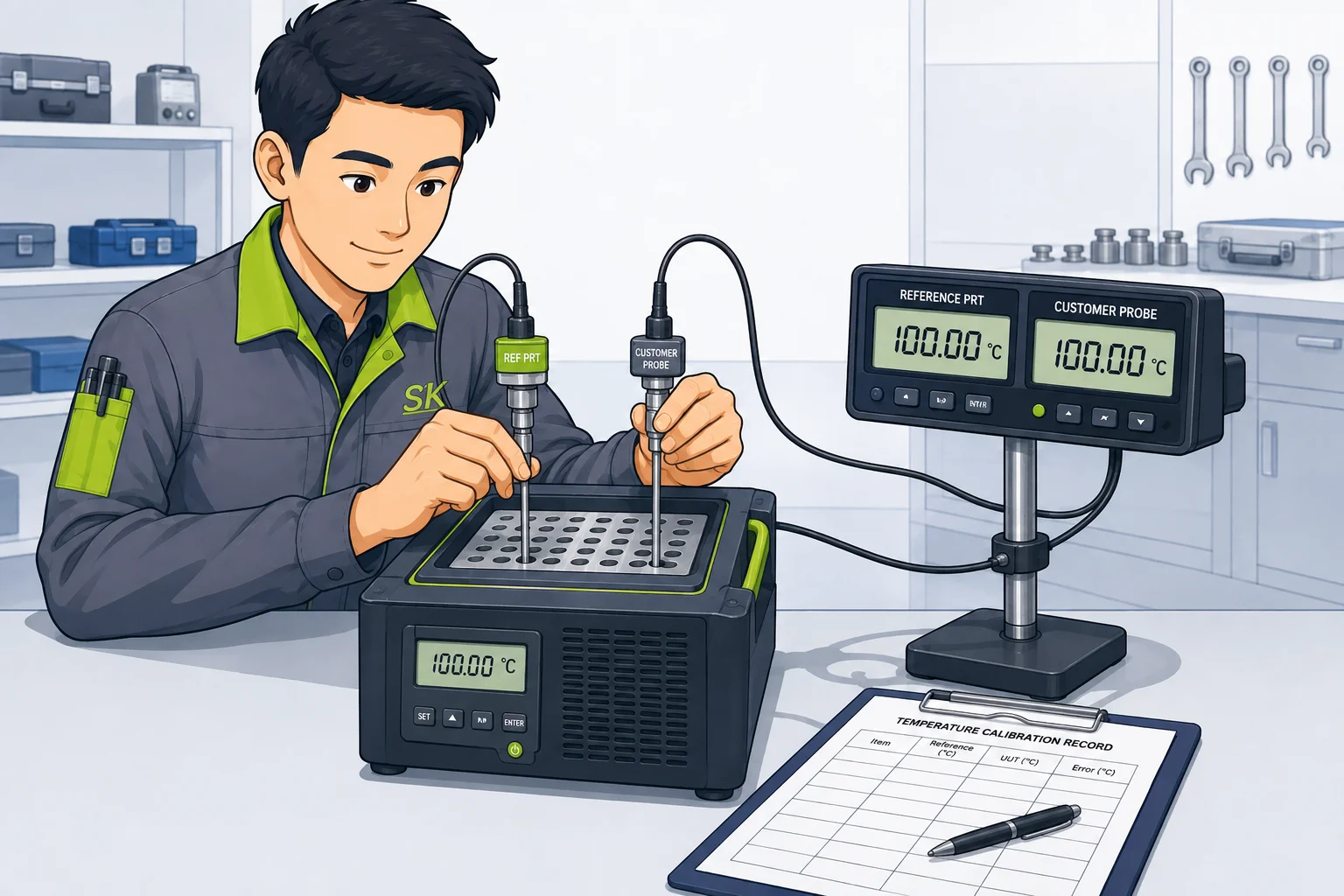
Immersion depth, heat transfer, stabilization time, sensor response and source uniformity all affect the reported value.
- Match the operating arrangement where practical
- Wait for stability before recording
- Check cables, connectors, batteries and settings
- Evaluate error together with uncertainty
FAQ
Should the probe and readout be calibrated together?
When they are used as a system, calibrate the complete set in its normal configuration or clearly state whether results cover only the probe or readout.
How many temperature points are needed?
It depends on operating range and risk. A common plan covers low, middle and high values plus critical control points affecting quality or safety.