

Scales and mass
Inaccurate weighing scale: common causes and checks
Unexpected readings may result from the installation, environment, weighing method or equipment condition. Check the basics before deciding on further service.
Check installation and surroundings
Place the scale on a stable surface, level it according to its manual and reduce drafts and vibration. Check that the pan and load do not touch surrounding objects.
Check zero and weighing technique
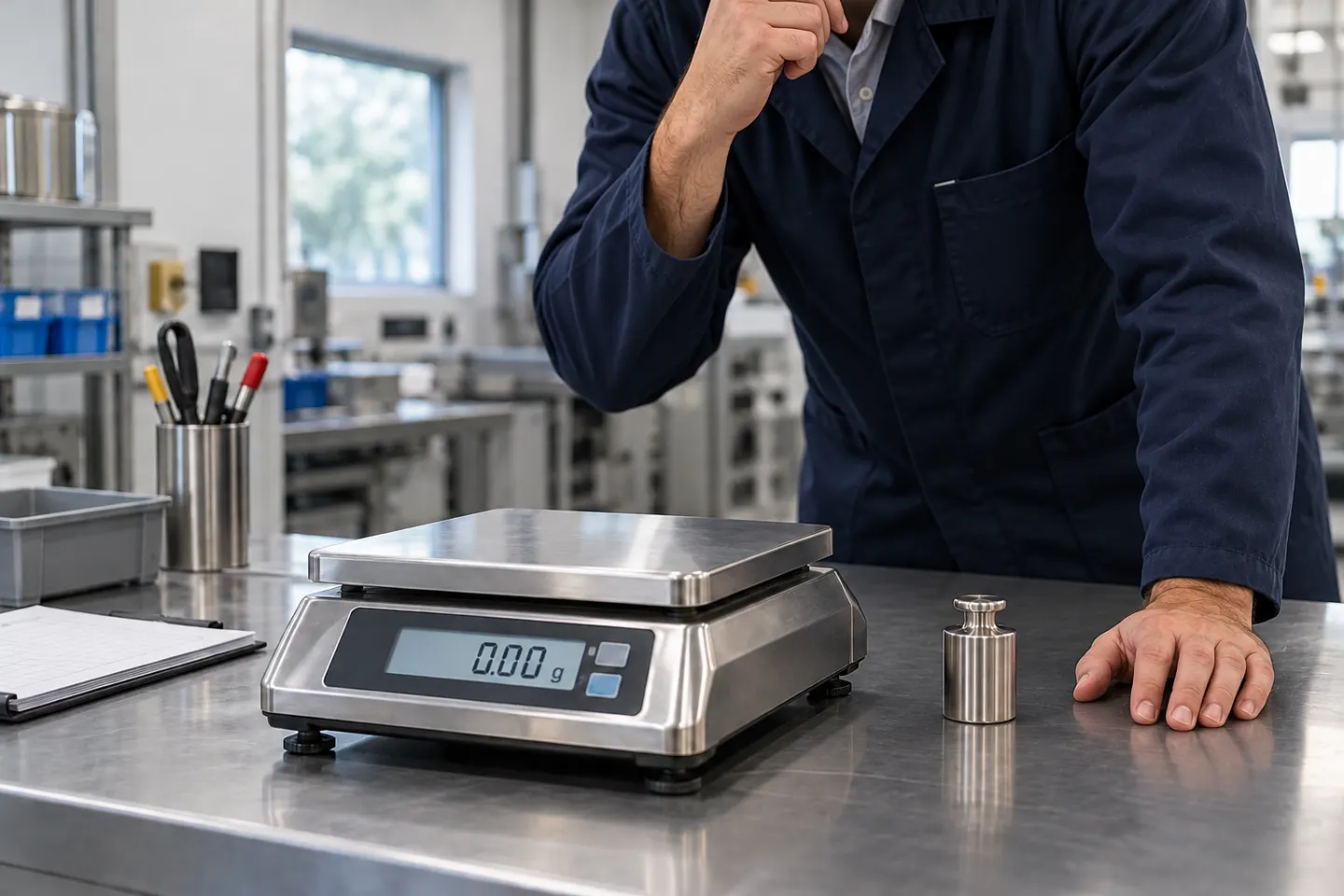
Follow the manufacturer's warm-up, zero and tare instructions, place the load near the center and wait for a stable result. Use a suitable reference weight for documented interim checks.
When to seek help
Remove the instrument from critical use if it fails your acceptance criteria, remains unstable, is damaged or overloaded, or needs confirmation after repair. Calibration compares indications with a reference; adjustment and repair are separate services.
Contact SK
Send the make, model, capacity, resolution, symptoms, operating loads, location and previous certificate to S K Sale and Service Co., Ltd. for assessment.
FAQ
Does a zero display prove accuracy at every load?
No. Check performance at relevant operating points.
Does calibration automatically include adjustment?
No. Agree any adjustment or repair separately.
Related calibration guides
View all guides- Weighing scale calibration: why it matters and how to prepare
- How to calibrate scales and standard weights for their intended use
- Standard weight classes: materials, tolerances and choosing the right weight